
Why We Decorate for Fall: The Canadian Roots of Autumn Traditions
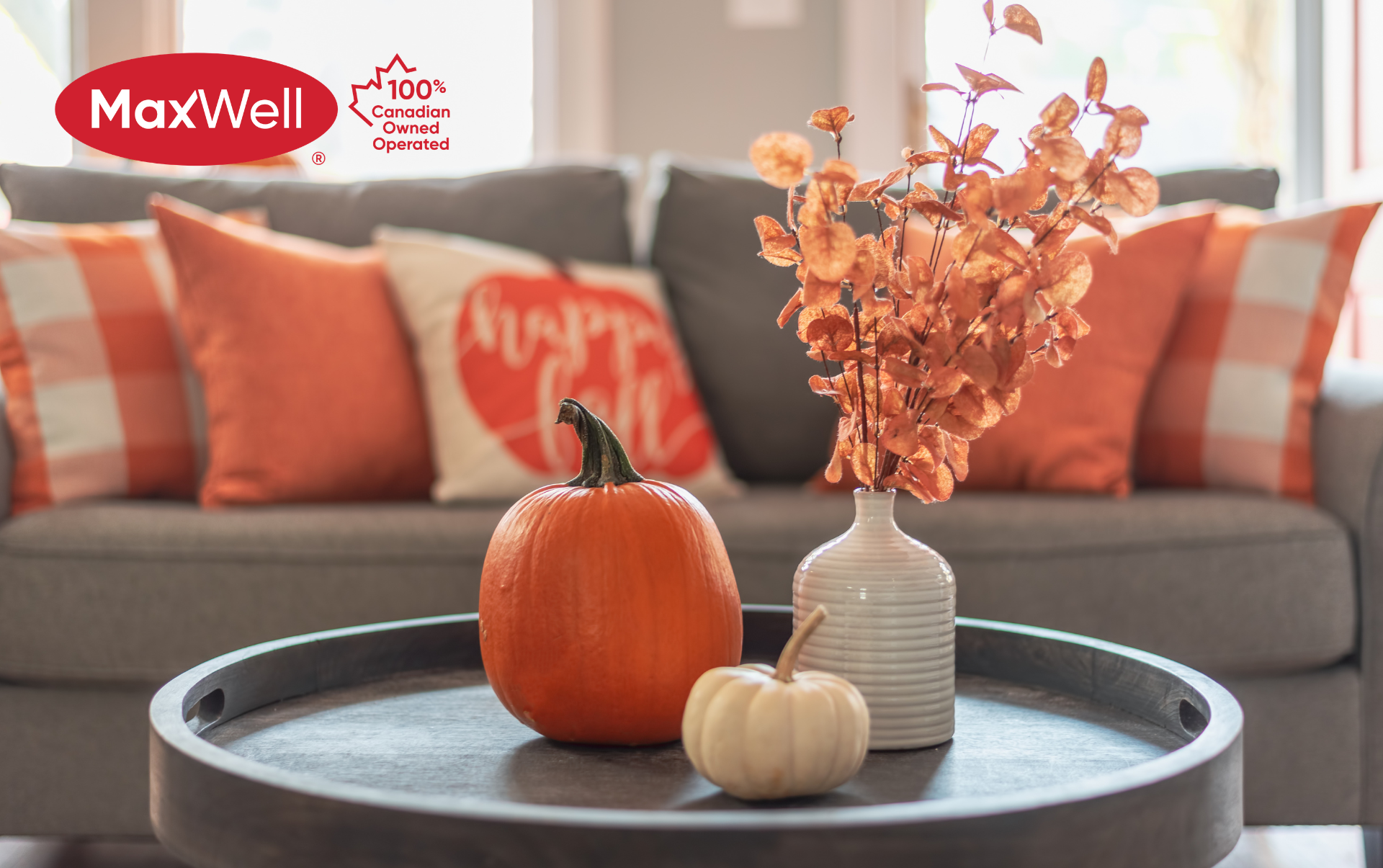
There is a moment every September when it happens. The air shifts. The light goes golden and slightly sideways. You walk past a display of pumpkins at a grocery store or garden centre and something in you responds before your brain even catches up. Suddenly you want candles and wool blankets and a wreath on the door.
We do not always stop to wonder why. The urge to decorate for fall feels instinctive, almost biological. And in a way, it is. The things we reach for this time of year, the pumpkins, the dried corn, the warm colours, the harvest imagery, carry the weight of traditions that stretch back centuries in this country and much further than that in human history. Understanding where they came from makes them feel a little richer.
Pumpkins: More Canadian Than You Might Think
The pumpkin is the undisputed symbol of fall decorating, and it has a deeper connection to Canada than most people realize.
Pumpkins are native to North America. Indigenous peoples across the continent cultivated them for thousands of years before European contact, using them as a food staple, particularly during the difficult months of late fall and winter. When European settlers arrived, they quickly adopted the pumpkin as a reliable crop that could sustain them through the cold. The pumpkin was not a novelty. It was survival food that became cultural currency over generations.
Early settlers carved turnips into lanterns to ward off spirits, a tradition that later evolved into the pumpkin jack-o-lanterns we know today, mostly because North American settlers could not find turnips in the new world. That practical substitution, swap the turnip for what was actually growing here, is a quietly Canadian kind of story. Make do with what the land provides.
Today we buy pumpkins largely as decoration, but when you put one on your front step you are participating in a tradition that connects Indigenous agricultural knowledge, European harvest customs, and the particular reality of life in North America all at once.
The Harvest Palette: Why Orange and Gold
The warm colours of fall decorating, burnt orange, deep gold, russet red, forest green, are not arbitrary. They are the literal colours of harvest time in the northern hemisphere. Ripening squash, changing maples, drying corn husks, the last of the late-season flowers. These are the colours that have surrounded people in this part of the world every autumn for as long as people have been here.
There is good psychological evidence that humans are drawn to these colours in autumn in part because our ancestors needed to notice and respond to them. A landscape shifting to gold and orange meant food was ready. It meant winter was coming. It meant work to do and reasons to gather.
When we bring those colours inside, we are doing something our nervous systems understand at a level below conscious thought. It feels like fall because it looks like what fall has always looked like.
Canadian Thanksgiving and the Harvest Table
Canadian Thanksgiving developed primarily as a harvest celebration rather than a historical commemoration, and its earlier October timing allows Canadians to celebrate during the peak of fall harvest festivals, pumpkin season, and autumn foliage across the country.
The very first Canadian Thanksgiving was in 1578 in Newfoundland, when explorer Martin Frobisher gave thanks for surviving a long voyage. Today, the holiday blends European harvest customs with Indigenous expressions of gratitude.
The decorative traditions around Thanksgiving, the cornucopia spilling over with gourds and apples, the dried wheat sheaves, the table centrepieces of squash and candles, are visual representations of abundance. They say: we made it through another growing season. There is enough. This is a feeling worth marking.
The cornucopia itself, the horn overflowing with fruit and vegetables, comes from ancient Greek mythology, but it found a natural home in Canadian harvest traditions because the imagery mapped so perfectly onto the agricultural reality of fall in this country. A good harvest in a place where winters are long and cold was not a small thing. It was the difference between comfort and hardship. We still set those symbols on our tables even though most of us have never worried about whether there would be enough to eat in February.
Samhain and the Thinning of the Veil
The spookier side of fall decorating has its own ancient roots. The origins of Halloween can be traced back to the Celtic festival of Samhain, which marked the end of the harvest and the beginning of winter. According to legend, the boundary between the living and the dead blurred on this night, allowing spirits to cross over. To blend in with wandering spirits, people wore animal skulls, antlers, and furs, and gathered around massive bonfires.
Brought to North America by Irish and Scottish immigrants, Halloween evolved into the Canadian tradition we know today. Those immigrants arrived in significant numbers throughout the 1800s, carrying their customs with them, and the traditions took root in Canadian soil alongside everything else they brought.
When we hang a wreath of dried leaves and berries, light candles against the darkening evenings, and put something a little witchy on the mantle, we are participating in a tradition that is fundamentally about the same thing it has always been about: acknowledging that the dark is coming, and making something beautiful in the face of it.
Apples and Orchards
The apple is the other great symbol of Canadian fall, and like the pumpkin it has a story worth knowing. Apple orchards were among the first agricultural projects of European settlers in Canada, and apple harvests became a social occasion, a reason for communities to gather at the end of the growing season.
Apple picking as a fall activity, now a beloved Canadian family outing particularly in Ontario and BC, is a very old impulse dressed in a modern format. The desire to go somewhere and participate in the harvest, to come home with something you gathered yourself, connects directly to traditions that predate Canada as a country.
A bowl of apples on a kitchen counter in October is a decoration. It is also a very old signal that abundance is here, use it before winter arrives.
The Instinct to Nest
There is a broader pattern underneath all of these specific traditions. Fall decorating, at its core, is nesting behaviour. It is the human equivalent of what animals do when they sense the season changing: prepare the shelter, make it warm, signal that it is a place of safety and comfort against what is coming.
This instinct is not uniquely Canadian, but it takes a particular shape here. Canadian winters are serious. The contrast between the warmth of a well-lit home in October and what waits outside in January is one of the more dramatic seasonal experiences on the planet. The things we do to our homes in the fall, the warm textiles, the candles, the harvest imagery, the colours of ripe things, are a way of fortifying against that contrast before it arrives.
We are, every September and October, doing something our ancestors did in this same landscape for a very long time. The pumpkin on the step and the wreath on the door are newer versions of much older gestures.
That feels like a good reason to enjoy them.
MaxWell Realty Canada is a real estate company with offices across Canada. This article is intended for general informational purposes.
Posted by MaxWell Realty Admin onEnjoy this blog post? Click here to subscribe for updates
Leave A Comment